


In the era of ‘The Great Stay,’ the relationship between employer and executive has become increasingly transparent—for the employer. With 2026 workplace surveillance tools now capable of flagging external headhunter outreach in real-time, many technologists and leaders feel more ‘walled off’ than ever. Cutting people off from networking and building professional relationships is rarely a good thing. Blocking recruiter access doesn’t just “protect” your assets; it creates a culture of friction that suppresses wages and stifles the very innovation your technical team was hired to build.
Companies Block Recruiter Calls Because They Can
Keeping Executives In the Same Job Costs Less
Companies block recruiter calls and emails to prevent headhunters from poaching talent. Their impulse is understandable. Corporations invest a small fortune in recruiting, training, and onboarding senior executives and technologists. In fact, it may cost a company more than $100,000 in executive search fees just to get a senior executive in the door.
Non-Competes Also Make it Hard for Employees to Leave
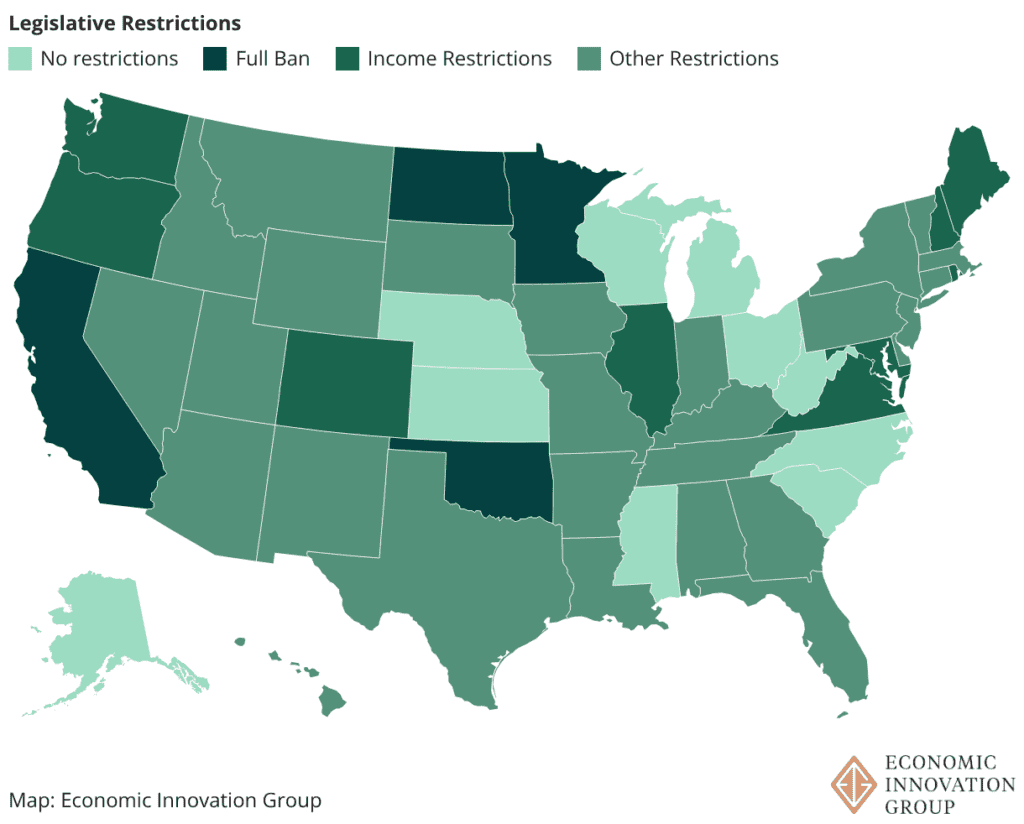
Non-Compete Agreements are still legal in most states. According to the Federal Trade Commission, non-competes “harm employees by restricting job mobility, suppressing wages, and limiting career growth, often forcing workers to stay in undesirable jobs or leave their industry entirely.” These contracts, affecting roughly 1 in 5 US workers, prevent employees from working for competitors or starting new businesses, reducing their bargaining power and income potential. While the FTC banned the contracts in all states, a district court issued an order in August 2024 stopping the FTC from enforcing the rule. The FTC appealed that decision, but in September 2025, under a new administration, it took steps to dismiss its appeal in the Fifth Circuit.
While a national ban is not yet in place, California, Minnesota, North Dakota, and Oklahoma have enacted total bans on most noncompete agreements, rendering them generally unenforceable. Other jurisdictions have implemented significant restrictions, typically prohibiting them for low-wage earners or specific industries. The Economic Innovation Group has a Non-Compete Tracker that stays current with legislative changes.
Job-Hugging Candidates are Reluctant to Leave
However, the market has transitioned from the “Great Resignation” to a period of deep labor stasis. According to recent reporting by The Wall Street Journal, we are seeing a peak in “Job Hugging”—where workers cling to their current roles amid broader economic volatility. This stagnation is backed by Gartner’s 2026 Workforce Research, which notes that while employees are staying put, their “discretionary effort” has plummeted. Workers aren’t just afraid of losing their jobs; they are afraid of becoming irrelevant in an AI-driven economy.
The Problem with the “Talent Moat”
When companies block recruiter calls in this environment, they aren’t just ‘hoarding’ talent—they are exacerbating a culture of fear. As Bloomberg has recently noted, we are in an age of ‘Forever Layoffs’—smaller, more frequent, and highly targeted rounds of cuts. In this climate, employees need to know their market value more than ever. Blocking access prevents the very ‘career cushioning’ that allows top talent to feel secure and engaged.
Human Capital is a Company Asset
Moreover, company fortunes are made by that talent. The very best CEOs spot the blue sky, set the strategy, and lead companies to massive, multi-billion-dollar valuations. Chief Revenue Officers capture millions in sales. Chief Technology Officers and Chief Product Officers deliver technologies and devices that create markets where none existed before.
In a hyper-competitive business world, losing a key executive or genius technologist to a competitor can do serious damage to a company’s bottom line. But becoming “Big Brother” by monitoring and blocking outreach to your team is focusing on the wrong thing. You need to focus on what keeps your best people engaged.
Blocking Recruiters Creates Wage Suppression
When a company prevents an executive from discovering their market value, it actively harms that person’s financial future. Additionally, employers benefit from “asymmetric information” in the labor market, where they know their employees’ wages but discourage employees from sharing their compensation with one another. This is another driver of wage stagnation.
By preventing an employee from learning they are underpaid or from being recruited to a higher-paying role, a company is effectively taxing that person’s future earnings. This “tax” adds up over a lifetime, affecting everything from home ownership to retirement security. Employers must consider the long-term ethical impact of these restrictive digital barriers.
Impact on Representational Leadership and Inclusion
By walling off their top employees and blocking career advancement, employers are inadvertently disempowering underrepresented talent. Organizations that claim to champion Representational Leadership prove themselves insincere when they prevent their most gifted workers from grasping the brass ring. Blocking recruiter access to diverse talent does real damage to career velocity. Preventing access to these conversations isn’t “retention”—it is a structural barrier to equitable wealth creation.
Preventing Your Executives from Earning More Does Real Harm
When a company prevents an executive from getting a better job elsewhere, it actively harms that person. First, there’s the financial harm that has lifelong implications. That individual, in all likelihood, will make less in every job from that point forward. Since most people make more money when they join a new employer, you are suppressing that person’s wages into perpetuity. The cost of reduced income adds up.
So maybe that worker puts off buying their dream home for half a decade or more. They steer their kids to the local community college because that’s all they can afford. They don’t save for a rainy day or retirement. Maybe they can’t afford certain life-sustaining medications. Employers need to consider the long-term impact of their recruiter-blocking practices.
The Same Companies Poach from Competitors
The same companies that block the recruitment of their top leaders often have hoards of talent acquisition professionals actively poaching from competitors, partners, and even clients. Poaching candidates from a competitor is common practice — a longstanding game of cat and mouse. Target companies hide the mice as a defensive move. To win, poaching companies simply offer more cheese.
If You Build It, They Will Stay
There is a famous line in Field of Dreams: “If you build it, he will come.” But now, the businesses must evolve: If you build it, they will stay. Employers of choice that treat their Chief Technology Officers and engineering leaders well inspire loyalty within their teams. Good bosses motivate employees to stay, fostering a sense of community with co-workers.
When Workers Leave for a Better Job, Congratulate Them
And if one of your best people tells you they are leaving for an amazing opportunity at another company, be happy for that person. Congratulate her. Life is far too short. Who knows? Maybe you’ll find a path to doing business together again. You are growing your company’s influence outside the bounds of your corporation. Companies are stronger when they foster goodwill. There’s a reason the golden rule is golden. Paying it forward has its rewards. Occasionally, those who leave find out the grass was not greener on the other side. They may very well return with a new appreciation for all your company offers.
Of course, I wonder what you think and what you’ve observed in your career. To learn more, check out The Power of Building Relationships with Retained Recruiters.



As a former executive recruiter, and a serial entrpreneur, much of the article resonates strongly with me. The skills I developed by learning how to proactively recruit “protected” executives (WAY before social media and cell phones…even voicemail) have endured and allowed me to perform most efficiently. I do believe, however, that the “captive executive” is here to stay…precisely because of the cost of human capital so eloquently articulated in the article. Kudos on a well written and infoprmative piece!
My opinion is on the exact opposite end. I got here from a Google search on how to get recruiters to stop contacting me. Thankfully I’ve guarded my work info carefully, so haven’t gotten calls and emails there, but I’d be very happy if my employer blocked recruiters!