
When a CEO looks across the boardroom table, the caliber of their direct reports—from the CTO and CIO to the CHRO—determines the organization’s trajectory. Building a C-suite of A-players is not merely about finding individual stars; it is about assembling a high-impact executive leadership team capable of navigating the paradoxes of modern innovation. While the methods of recruitment have evolved since Apple’s early days, the core challenge remains the same: ensuring that every seat in the senior leadership circle is occupied by someone who elevates the entire room.
In the current market, the value of a top performer is higher than ever. Harvard Business Review notes that high performers are generally 400% more productive than average employees and as much as 800% more productive in highly complex occupations. As organizations navigate rapid technological shifts, the ability to recruit and retain a high-impact executive leadership team has become a central differentiator for market leaders.
The Steve Jobs Core: The Complexity of Excellence
Apple’s Founder, Steve Jobs, was a deeply complex, often paradoxical figure—a combination of a visionary genius and a demanding, sometimes brutal perfectionist. He was passionate, charismatic, and intensely focused, often breaking people down emotionally while simultaneously inspiring them to produce the best work of their careers. This intensity was the foundation of his executive recruiting strategy.
“I’ve learned over the years that, when you have really good people, you don’t have to baby them. By expecting them to do great things, you can get them to do great things. The original Mac team taught me that A-plus players like to work together, and they don’t like it if you tolerate B-grade work.”
— Steve Jobs
Jobs’ strategy was centered on preventing the “Bozo Explosion”—a cycle where B-quality managers hire C-quality subordinates to avoid being challenged. By maintaining an uncompromising bar for his direct reports, Jobs ensured that Apple remained a self-policing culture of excellence where the “best of the best” were driven to stay.
The Succession: Tim Cook’s “Star System”
While Steve Jobs was an autocratic visionary, Apple CEO Tim Cook is characterized by The Wall Street Journal as a diplomatic stabilizer. However, Cook has not lowered the bar for A-Players; he has simply refined the senior leadership team’s frequency.
- From Solo Genius to Star Systems: Cook shifted the Apple C-suite from a model revolving around one individual to a highly collaborative “star system.” He prioritizes “low-ego” A-Players who excel in operational execution.
- The Operational A-Player: Under Cook, the definition of an A-Player expanded to include masters of supply chain and financial discipline. He proved that an elite executive team is as vital to execution as to invention, helping Apple reach a $3.7 trillion market cap by late 2025.
Modern C-Suite Alignment: The Visionary and the Architect
Jensen Huang (Nvidia): The Flat-Structure Purist
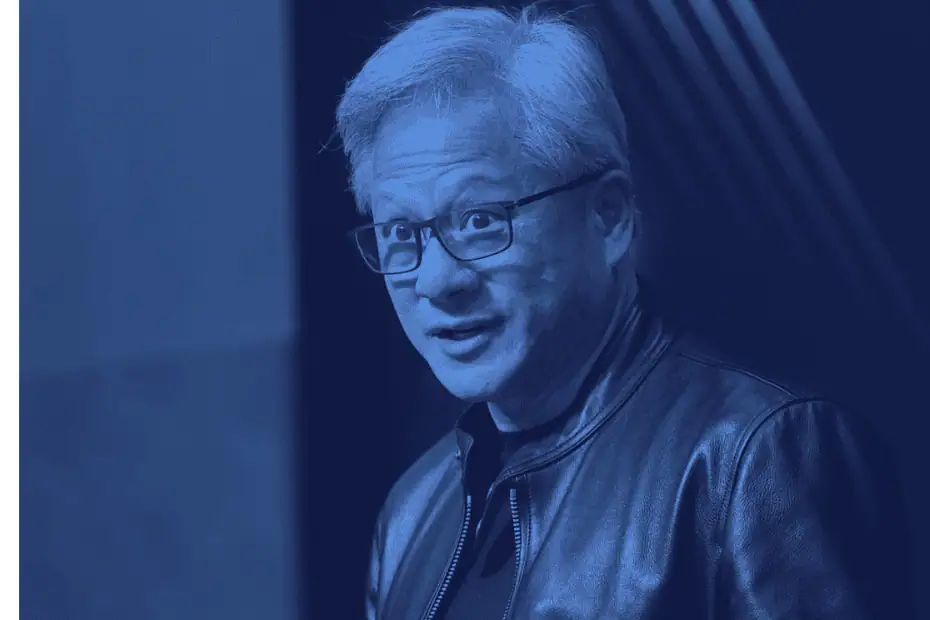
If any leader mirrors Jobs’ intensity in 2026, it is Nvidia President and CEO Jensen Huang. Like Jobs, Huang maintains an exceptionally flat organizational structure, currently managing 36 direct reports to eliminate middle-management “noise.”
- Direct Access: Huang avoids 1:1 meetings in favor of group discussions, ensuring his entire senior leadership is aligned on the same “signal” at the same time. He prioritizes leaders who can orchestrate autonomous AI agents, a 2026 requirement for maintaining Nvidia’s infrastructure dominance.
Satya Nadella (Microsoft): The Nuanced Alternative
The most successful cultural alternative to the Jobsian model is Microsoft CEO Satya Nadella. Instead of a fixed “A-Player” pedigree, Nadella focuses on a Growth Mindset.
- “Learn-it-alls” vs. “Know-it-alls”: While Jobs looked for established brilliance, Nadella prioritizes “learnability”. He replaced Microsoft’s “smartest person in the room” culture with one of empathy and curiosity.
- The Result: Nadella’s strategy suggests that a company of learners can be more resilient than a company of fixed geniuses during major technological transformations.
Hiring for Capability and Resilience
As noted in recent HBR and Hunt Scanlon leadership studies, the criteria for a “C-suite A-Player” have been recalibrated for the current landscape:
- Emotional Intelligence (EI) Over Tenure: In 2026, EI is a top predictor of leadership success. Boards are prioritizing leaders who can manage “change fatigue” across distributed teams.
- From Credentials to Capability: 25% of major tech firms have de-emphasized traditional degrees in favor of “behavioral assessment” and “strategic agility.”
- The AI-Fluency Standard: The new A-Player is an executive who can integrate AI fluency into their functional domain—whether they are a CTO rethinking product or a CHRO redesigning the workforce.
Ultimately, the most effective retained executive search strategies in 2026 mirror Jobs’ original insight: recruit the best, but define “best” as those with the adaptability to reinvent themselves as fast as the market requires.