War, Oil, Bird Flu: Leading Through a World That Won’t Sit Still
In response to the ever-shifting threat landscape, some leaders track unfolding events in real time — smartphone notifications on, alert sounds enabled. But when the news is truly unrelenting, even the alert itself becomes the problem. The default iOS tri-tone became so associated with bad news that Apple quietly changed it in iOS 17 to “Rebound” — a softer, less insistent sound. Most senior leaders eventually find their own version of the same solution: they limit how much news they consume, when, and how. For those of us who still feel overwhelmed by it all, we simply close our eyes and make a silent wish that it would all go away. Granted, we must open our eyes again. But it helps.
What Is the Permacrisis?
The term “permacrisis” — a portmanteau of “permanent” and “crisis” — was coined in the 1970s but rose to wider use when Collins Dictionary named it Word of the Year in 2022. It describes an extended period of instability and insecurity resulting from a series of catastrophic events. Not one crisis. Not a crisis followed by a recovery. A state of continuous, overlapping disruption with no clear return to normal.
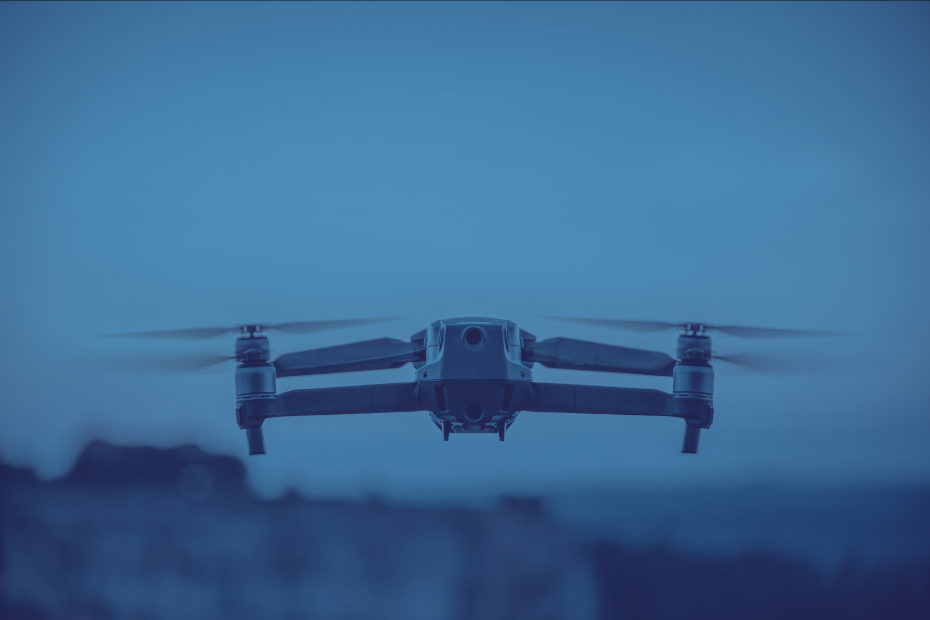
In 2026, the permacrisis has evolved into what analysts call “polycrises” — global threats like asymmetric drone warfare, energy volatility, and resurging health risks such as H5N1 that do not occur in isolation. They overlap and amplify one another. For leaders, this means the traditional bounce-back model is obsolete. Resilience is no longer about returning to a previous normal. It is about the capacity to function effectively while in a permanent state of flux.
The old playbook assumed disruption was temporary. The new one has to assume disruption is the operating condition.
What This Means for Leadership in 2026
The most dangerous risk in a permacrisis is a leadership team still running on legacy assumptions. Three specific shifts in executive capability define what the moment demands.
Cognitive Agility Over Continuity Planning
Traditional plans are often too rigid for overlapping disruptions. Leaders must be able to process contradictory data and pivot operating models in days, not quarters. The five-year plan is not dead — but the leader who cannot adapt it when conditions shift in a matter of weeks is.
Navigating Information Asymmetry
In an era of AI-generated noise, deepfake disruption, and asymmetric threats like drone warfare affecting global supply chains, the critical leadership skill is distinguishing between noise and existential signal. Not everything that sounds alarming is. Not everything that sounds routine is. The leaders who thrive are those who can read the signal through the noise without either dismissing the threat or drowning in it.
The Resilience Mandate
The 2026 Draup report notes an 81% spike in demand for governance and risk-management expertise. Boards are seeking what some analysts call “Architects of Agility” — leaders who can protect enterprise value in a world that is permanently off-balance. That is not a personality trait. It is a skill set that can be identified, assessed, and recruited for.
Where Does the Permacrisis Leave Executive Search?
In a world where change is everywhere and all at once, the search for leadership becomes a matter of strategic endurance.
We are no longer looking for leaders who can execute a five-year plan in a predictable market. We are identifying leaders who can maintain organizational integrity while the market is in flux — who can make good decisions with incomplete information, who can keep teams coherent when the external environment is not, and who understand that the goal is not to eliminate uncertainty but to lead through it with clarity.
Executive search in a permacrisis era functions as a high-stakes filter for cognitive agility. It requires investigative rigor that goes beyond traditional track records to uncover how a candidate actually processes contradictory data in real time. The search process is not just about finding a person. It is about verifying the capacity for leadership in an era that is permanently off-balance.
Great Leaders Still Make a Difference
If the permacrisis has taught us anything, it is that while technology and geopolitical shifts set the stage, human judgment determines the outcome. The leaders who thrive in this environment do not promise a return to a previous normal. They promise readiness for the stably unstable.
They can look at overlapping horizons — drone warfare, energy spikes, a new health threat — and maintain a clear strategic heading. They do not pretend that the complexity is manageable. They lead through it anyway. That is the ultimate test of leadership mettle.
At The Good Search, identifying this capacity is core to how we assess every candidate we present. The competency is real, assessable, and recruitable. And in 2026, it may be the most important thing a board can look for in a new C-suite leader.
Assess This Capacity in Your Next Search
To learn more about how we evaluate cognitive agility, risk leadership, and the specific capabilities the permacrisis era demands, explore the CAIO Competency Map, just one of many resources we offer in the Executive Intelligence Library.
Got Search? Let’s Talk
We welcome the opportunity to cultivate friends of the firm.
Thank you for reading. Of course, we welcome your comments.